
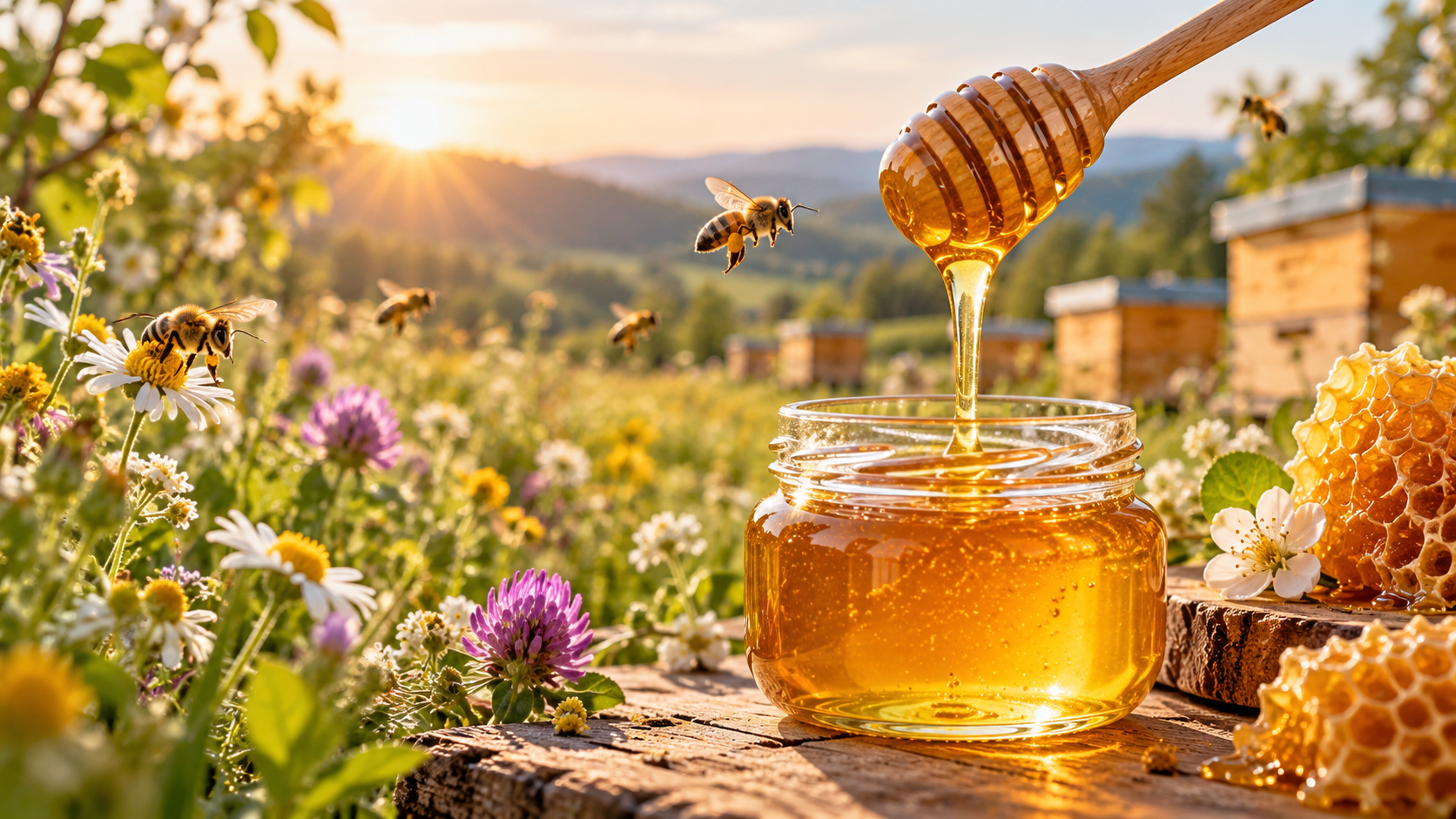
Imagine a young child spreading honey on a slice of bread at breakfast. Before heading off to school, the child happily enjoys bread topped with butter and honey. Meanwhile, somewhere else in the world, an athlete is drinking water enriched with a few drops of propolis after a workout. Another person is preparing a mixture of honey, pollen, and walnuts for a mother suffering from stomach cancer. Or perhaps, when my son says, “Mom, my throat hurts,” I prepare honey and propolis water for him, while I apply a few drops of propolis to my daughter Doğa’s cold sore using a cotton swab.
Although the products we use may differ, our underlying goal is essentially the same: to feel better, look better, and ultimately live healthier lives. By combining traditional practices with modern approaches, we seek to benefit from the potential healing properties of the mysterious substances produced by bees.
Among these products, honey undoubtedly holds the most prominent place. Widely consumed around the world, honey is regarded in some cultures not merely as a food but almost as a natural source of healing. But is there genuine scientific evidence behind this belief? Or are some of the claims surrounding bee products simply legendary stories passed down from generation to generation?
In fact, the story begins long before a spoonful of honey reaches our table. As a bee moves from flower to flower, it does more than collect nectar; it also transports compounds produced in nature’s chemical laboratory over millions of years. Of course, behind every hive of honey lies not only the remarkable work of bees but also the considerable effort, dedication, and experience of beekeepers.
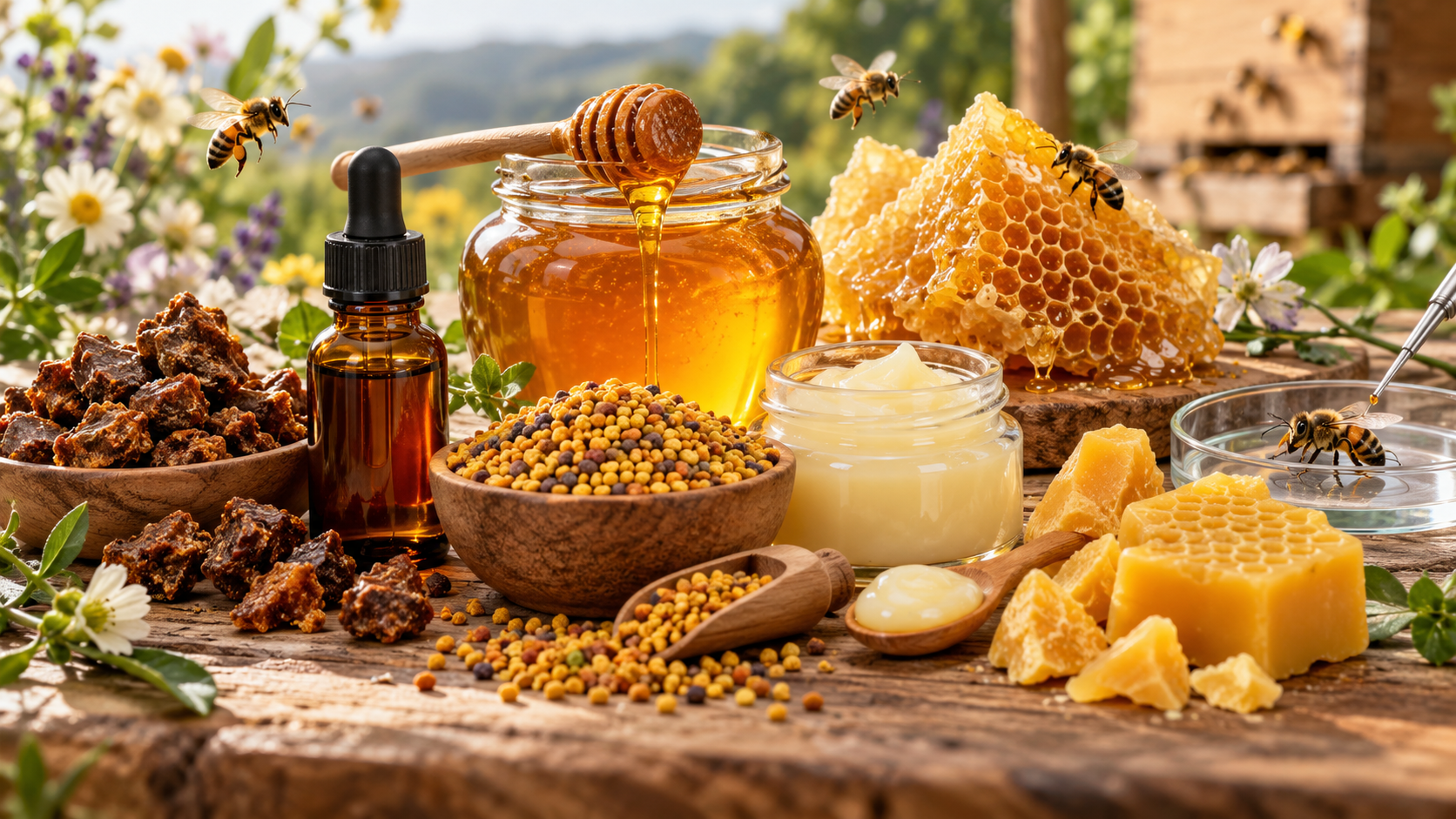
Bees, however, produce much more than honey. The raw materials they bring into the hive undergo complex biological processes, resulting in a variety of products, including honey, pollen, propolis, bee bread (perga), royal jelly, and even bee venom. The use of these products for health-related purposes is known as APITHERAPY.
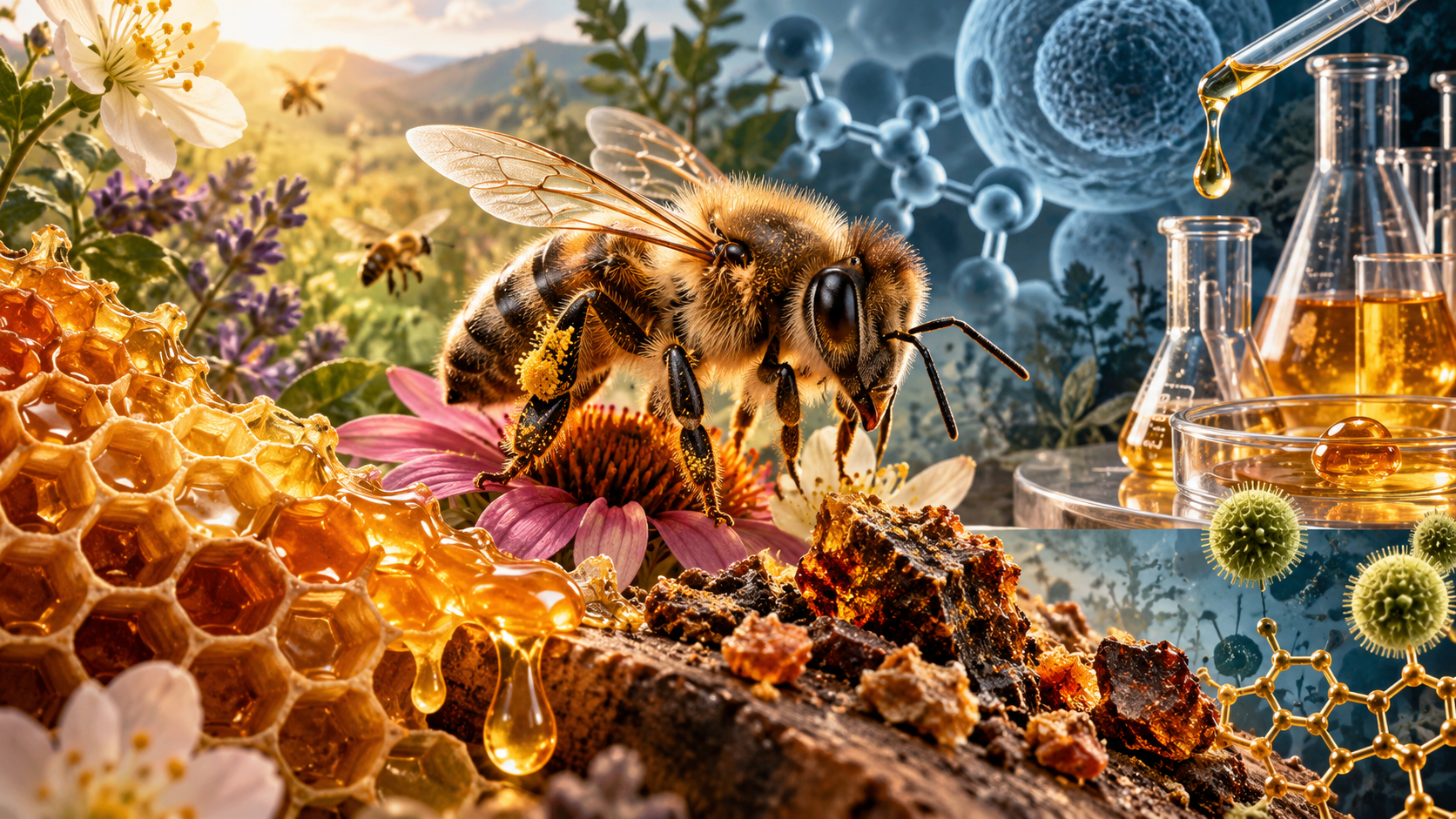
Perhaps this is why scientists describe bee products as “nature’s functional foods,” while the familiar expression “no bees, no life” continues to emphasize their indispensable role in pollination.
Honey
At first glance, honey may appear to be nothing more than a natural sweetener. However, in addition to various sugars, honey contains phenolic compounds, flavonoids, organic acids, minerals, and enzymes. Phenolic compounds, in particular, have attracted considerable scientific interest in recent years because of their antioxidant properties, which may help protect cells against damage caused by free radicals.
Research suggests that certain darker varieties of honey may contain higher concentrations of phenolic compounds and exhibit greater antioxidant capacity. In other words, the story of honey extends far beyond its taste, color, and appearance.
Honey quality is influenced by numerous factors, including bee species, environmental conditions, season, floral characteristics, harvesting time, temperature, whether hives are transported to areas rich in flowers (migratory beekeeping), and the knowledge and experience of the beekeeper. As these factors change, so do the analytical results, quality, and flavor of the honey produced.
One particularly intriguing issue concerning honey is crystallization, sometimes referred to as solidification. Many people assume that crystallized honey has spoiled and immediately attempt to heat it. Perhaps we can explore the potentially harmful compounds formed during heating in greater detail in another popular science article.
For now, however, does crystallization really indicate that honey has deteriorated? And what should we do with crystallized honey?
The simplest answer is to avoid heating it. Instead, we can stir it thoroughly for approximately 5–10 minutes using a suitable mixer to transform it into creamed honey, giving it a smooth, spreadable consistency similar to chocolate spread.
Propolis
We might describe propolis as the protective police force of the beehive. It is one of the most fascinating and chemically complex products in the bees’ natural pharmacy.
Bees do not collect propolis directly from flowers. Instead, they gather resinous substances from tree buds and bark and use them to produce propolis. They employ this material to seal cracks in the hive, prevent the entry of microorganisms, and protect the colony. In this sense, propolis functions almost like a natural security system.
This protective function is precisely what has attracted scientific interest. Research has demonstrated that propolis possesses antioxidant, antimicrobial, and antitumor properties, consistent with its rich content of phenolic compounds and flavonoids.
Bee Wenom
What would you say if I told you that even bee venom might have healing potential?
Years ago, at a beekeeping congress, I watched in amazement as a physician specializing in apitherapy performed a bee venom application, a procedure that requires controlled clinical use. At the time, the experience was quite surprising. Today, however, my astonishment has diminished as I have seen the growing body of research investigating the potential effects of bee venom on various conditions, ranging from joint disorders to cancer.
Of course, bee products are not limited to those mentioned above. Other products include bee pollen, royal jelly, bee bread (perga), hive air, and beeswax.
So, how should we decide which bee products to use?
An important consideration when selecting healthier and more reliable bee products is choosing a trustworthy brand or a beekeeper we know personally. Naturally, if the hives are located in an environment with minimal human interference and away from residential areas, the rest can be left to the hardworking bees.
When all these characteristics are considered together, it becomes clear that bee products have diverse and complex properties. Therefore, factors such as age, developmental stage, and health status should also be taken into account when using them.
This is precisely why science regards bee products not as “miracles,” but as “valuable natural resources worthy of further investigation.”
Although scientific evidence supports certain beneficial properties, many exaggerated claims have yet to be confirmed by sufficient research. It is not possible to state with certainty that honey, propolis, or other apitherapeutic products can independently treat serious diseases. Nevertheless, substantial scientific evidence supports the fact that these products contain biologically valuable active compounds and may form part of a healthy diet.
What makes this story truly fascinating is not simply a spoonful of honey or a few drops of propolis, but the remarkable creatures that produce them.
A bee weighing less than a gram visits hundreds of flowers each day, travels kilometers, and ultimately produces substances that humans have known and used for centuries.
Today, science continues to uncover the secrets of these remarkable products. Yet it seems that countless stories remain hidden within beehives, waiting to be discovered.
And perhaps the most fascinating aspect of these stories is that they are written by one of nature’s smallest engineers.
So, in the light of science, the decision is yours: Are bee products truly a source of healing, or are they merely a myth? What do you think?
References
Turkut, et al., Journal of Food Measurement and Characterization, 12(4) (2018) 2358–2365.
Karabulut et al., Journal of Apitherapy and Nature, 3(2) (2020) 87–98.
Aydeniz-güneşer et al., Journal of Agricultural Sciences, 31(1) (2025) 22–32.
Atalay, T. Veteriner Farmakoloji ve Toksikoloji Derneği Bülteni, 16(3) (2025) 127–131.
Celebi et al., Food and Bioprocess Technology, 19(1) (2026) 39.
Kowalski, S. Food Chemistry, 141(2) (2013) 1378–1382.