Green Living Above the City: Green Roofs
Imagine looking out your window on a rainy day. Water rushes off the roof of the building across the street, into the gutters, onto the road, and down into the sewer. In summer, that same roof heats up in the sun and continues to radiate heat into the evening. What would change if this gray surface were covered with plants? A specially designed layer could hold some of the rainwater, flowers could provide food for bees, and people could watch a living landscape change with the seasons. With the right design, they could also walk, relax, and take in the city views. Green roofs turn unused rooftops into places where plants can grow. It starts with rethinking the space we already have.
A Garden on the Roof?
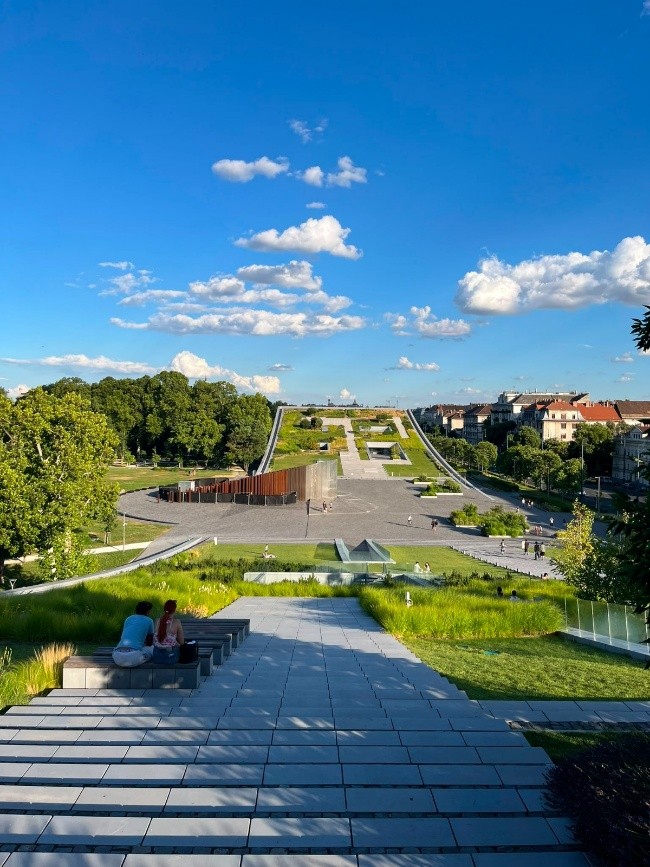
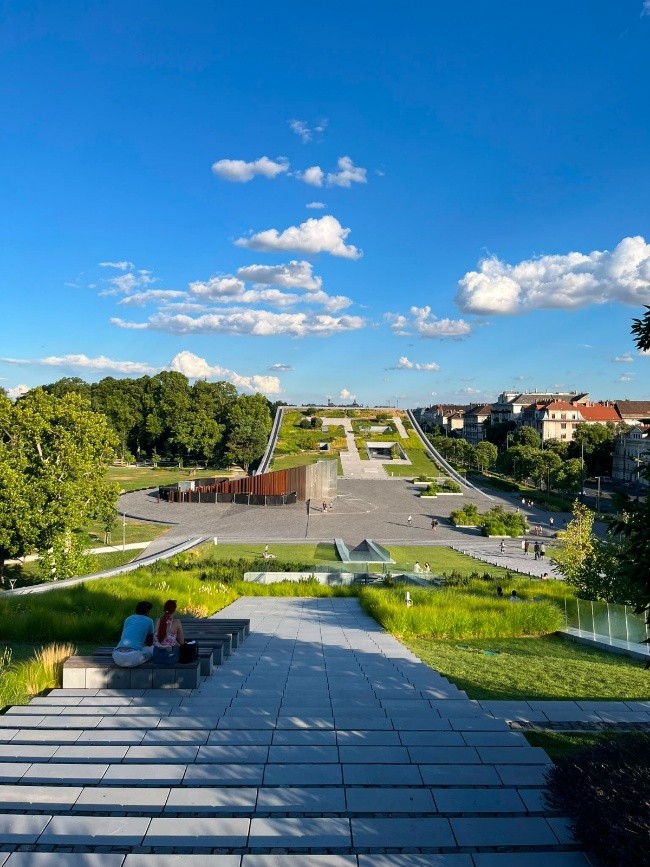
When you hear the words green roof, you might picture a layer of soil and a few plants. Underneath the plants is a lightweight growing medium where roots can develop. Below that are layers that retain water, drain the excess, and protect the building from moisture and root damage. Some green roofs have a shallow growing medium and hardy plants that require little maintenance. Others become full-fledged rooftop gardens, with a deeper growing medium, paths, seating, shrubs, and small trees. Green roofs can serve different purposes. Some retain rainwater, some provide habitat for wildlife, and others offer a garden where people can spend time.
Slowing the Flow of Rainwater
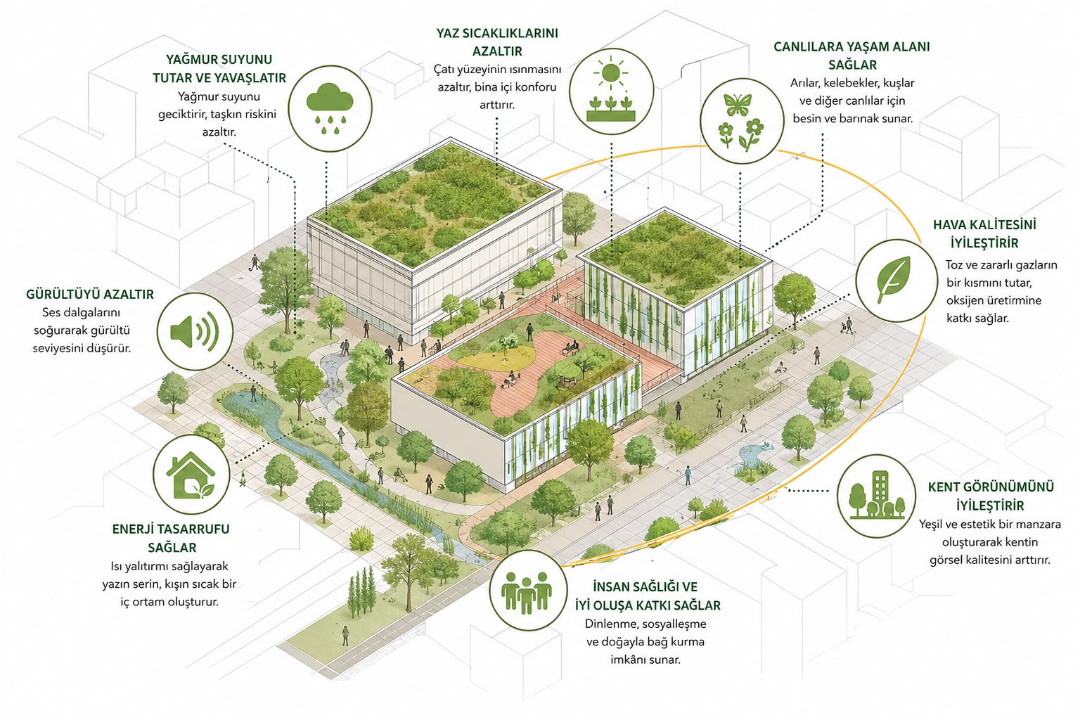
In cities, there are fewer and fewer places where rain can soak into the ground. Roofs, roads, parking lots, and sidewalks shed water, so rainfall quickly turns into surface runoff. During heavy rain, large volumes of water can reach the drainage system at once, putting pressure on urban infrastructure. On a green roof, rain first lands on the leaves, then filters into the growing medium, where it is held for a time. Plants take up some of the water, some evaporates, and the rest reaches the gutters more slowly. In this way, a green roof slows rainwater’s journey through the city. The contribution of a single roof may seem small, but many green roofs across a city can have a greater combined effect.
What Happens on a Roof in the Summer Heat?
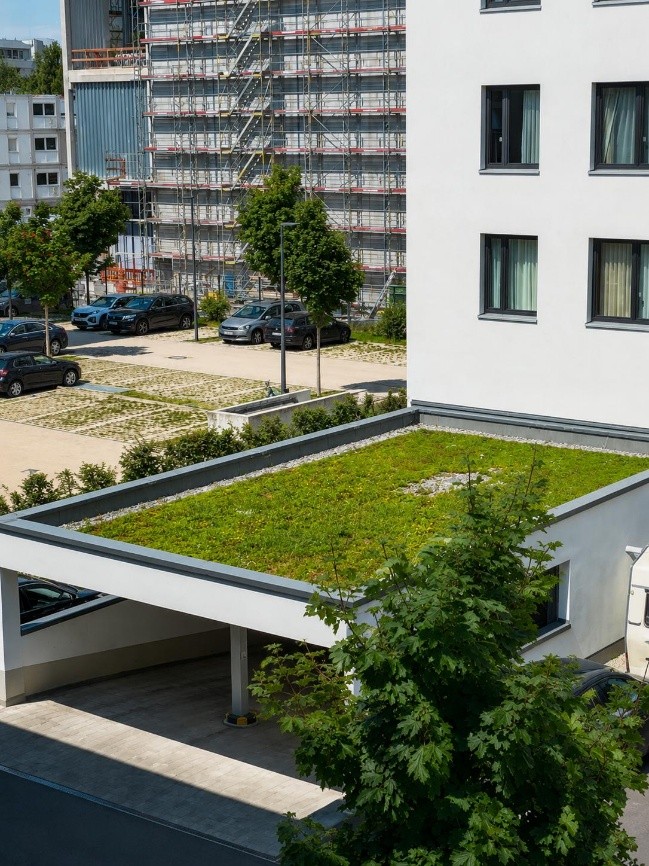
On a sunny summer day, a dark roof can become almost too hot to touch. As thousands of rooftops, roads, and concrete surfaces absorb and store heat from the sun, cities can grow warmer than surrounding areas. Plants shade the roof, and the growing medium shields it from direct sunlight. As plants take up water through their roots and release it into the air through their leaves, they also help cool the surface. Green roofs can therefore reduce extreme rooftop temperatures and provide an additional layer of protection against heat for the building’s interior. The extent of this cooling depends on the climate, the plants, water availability, and the building itself. Alongside trees and parks, green roofs offer a nature-based response to summer heat.
A Roof Through a Bee’s Eyes
Where might a bee stop as it flies through a city? At flowers in a park, in an apartment garden, among roadside plants, or perhaps on a rooftop. As green spaces grow farther apart, small places where wildlife can find food and shelter become more important. A green roof with plants that flower at different times can provide food for bees, butterflies, and other insects, which in turn may attract birds. Stones, sandy patches, and plants of different heights can create a variety of small habitats. Green roofs can act as stepping stones between fragmented green spaces, complementing the habitats found in natural areas. A diverse mix of plants and limited use of chemical treatments can help them serve this role.
The Cultural and Social Value of Green Space
How do we measure the benefits of a roof? The amount of rainwater it holds and the degree of cooling it provides tell only part of the story. Being around plants, enjoying a view, taking a break, or meeting others are all important parts of urban life. The opportunities for recreation, aesthetic enjoyment, learning, and a sense of belonging are known as cultural ecosystem services. An accessible green roof can become a quiet garden at a hospital or an outdoor classroom where schoolchildren observe plants and insects. Spring blossoms, changing autumn colors, and the smell of earth after rain make nature’s cycles visible again in a city dominated by hard surfaces.
Rainfall and Rooftops in Trabzon
People who live in Trabzon know how quickly rain can change the city. Roads get soaked within minutes, water rushes down steep streets, and drains fill up. Given the city’s high rainfall, steep terrain, and dense development, managing rainwater where it falls is particularly important.
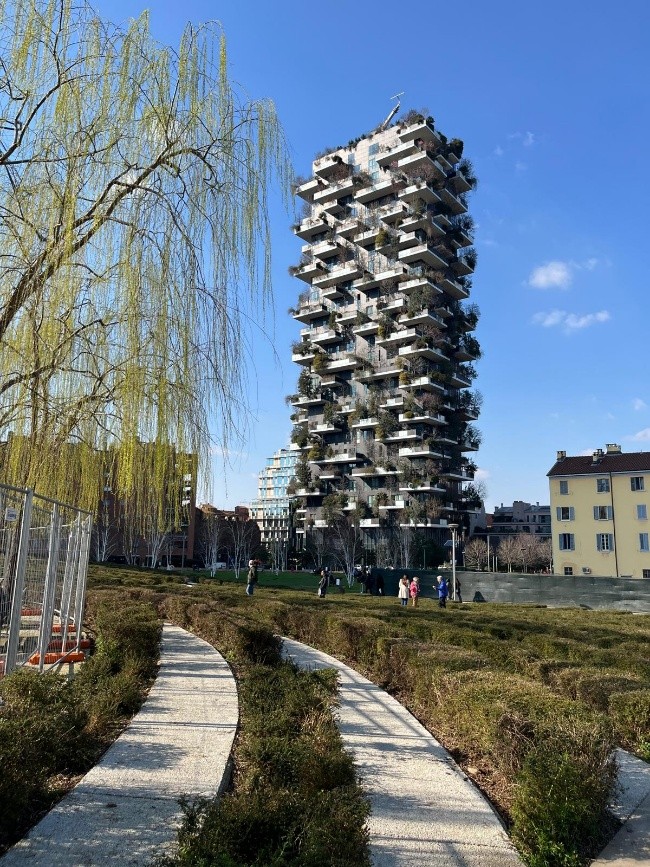
In Trabzon, buildings with large roof areas could provide a starting point. University buildings, schools, hospitals, public buildings, shopping centers, and parking structures are among the possibilities. Green roofs on these buildings could retain some rainfall while increasing the amount of planted space in the city center.
Trabzon’s topography gives green roofs another advantage. Many rooftops are visible from neighborhoods higher up and from surrounding hillsides, making them part of the cityscape. Planting some of these gray surfaces could make the cityscape feel more cohesive and vibrant.
Accessible rooftops could become public spaces overlooking the sea, valleys, and city. Universities could use their roofs for research, while hospitals could create gardens for patients and staff. In this way, green roofs could contribute to the city’s social and cultural life as well as its environment.
Conclusion: Looking Up
When we think of urban green space, we tend to picture parks, gardens, and street trees. Yet above us lies a network of rooftops that often goes unused. With thoughtful design, these surfaces can catch rain, ease summer heat, and provide places for wildlife to stop.
Green roofs are most valuable as part of a wider network of urban green infrastructure that includes parks, valleys, and natural areas. Planning rooftop greenery alongside parks, gardens, and street trees can strengthen the city’s connection with nature.
Perhaps making more room for nature in our cities can begin with a place we already have. Sometimes the first step is simply to look up.
References
Gulpinar Sekban, D. U., & Akyol, D. (2023). Contributions of green infrastructure-oriented planning and designing in residential gardens to the city’s ecosystem: Case of Trabzon City, Turkey. Journal of Urban Planning and Development, 149(1). DOI
Gülpınar Sekban, D. Ü., & Bekar, M. (2019). Konutlar için açık alan alternatifi: Yeşil çatı [Green roofs as an alternative open space for housing]. The Journal of Academic Social Science, 7(87), 355–362. DOI
Oberndorfer, E., Lundholm, J., Bass, B., Coffman, R. R., Doshi, H., Dunnett, N., Gaffin, S., Köhler, M., Liu, K. K. Y., & Rowe, B. (2007). Green roofs as urban ecosystems: Ecological structures, functions, and services. BioScience, 57(10), 823–833. DOI
Liu, H., Kong, F., Yin, H., Middel, A., Zheng, X., Huang, J., Xu, H., Wang, D., & Wen, Z. (2021). Impacts of green roofs on water, temperature, and air quality: A bibliometric review. Building and Environment, 196, 107794. DOI
Williams, N. S. G., Lundholm, J., & MacIvor, J. S. (2014). Do green roofs help urban biodiversity conservation? Journal of Applied Ecology, 51(6), 1643–1649. DOI