
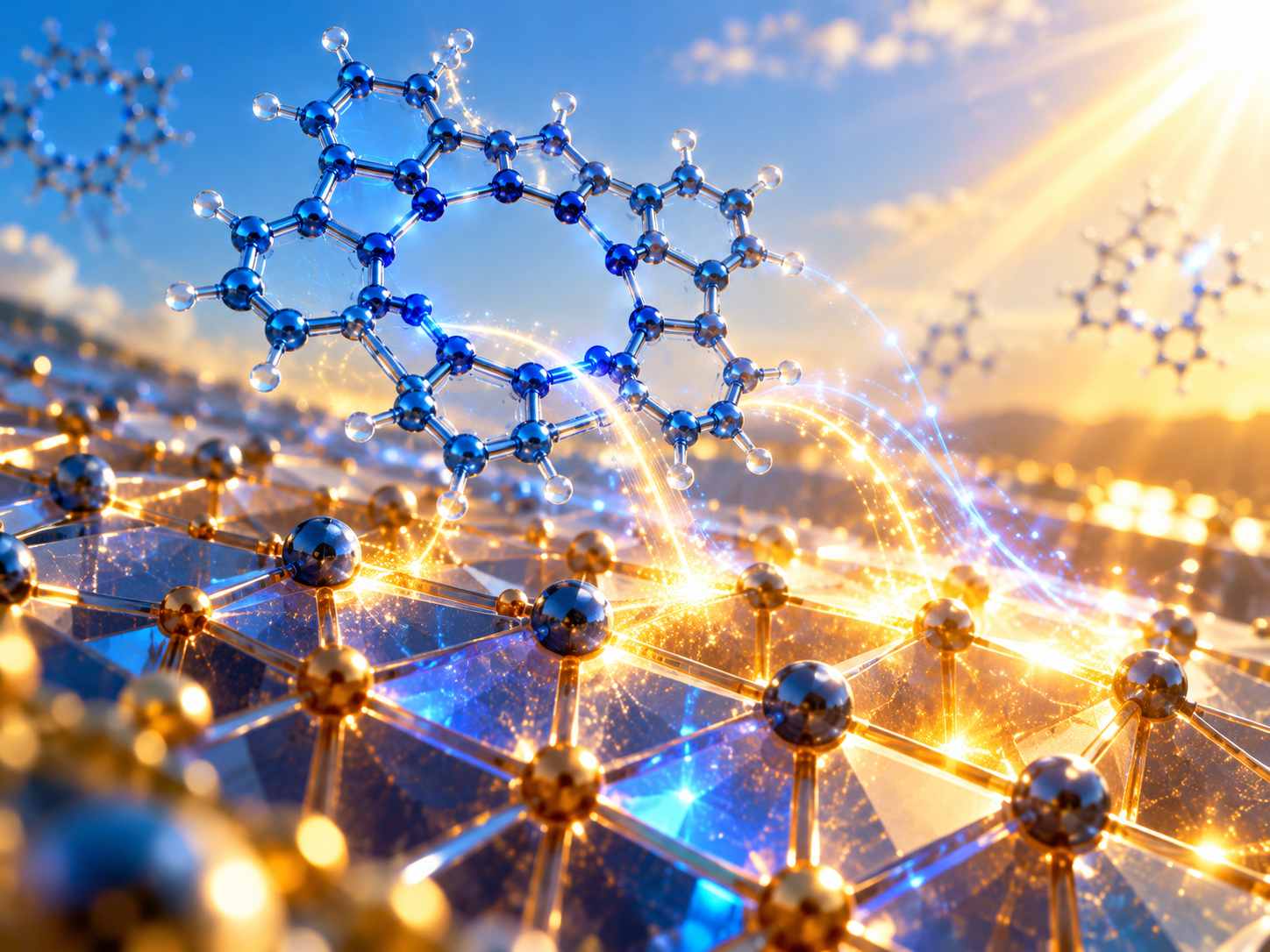
The ever-growing global demand for energy is driving humanity toward nature’s most abundant energy source: the Sun. For decades, the dark-blue silicon solar panels commonly seen on rooftops have played a crucial role in the transition toward clean energy. However, conventional silicon solar cells are gradually approaching their theoretical efficiency limits. At this critical point, materials scientists have introduced a promising new technology with the potential to revolutionize solar energy conversion: perovskite solar cells.
Yet, the story does not end here. Fully harnessing the remarkable potential of perovskite solar cells requires highly efficient cooperation at the molecular level. This is where a unique family of molecules comes into play, capable of capturing light like a molecular net: phthalocyanines.
What Are Perovskites, and Why Are They So Exciting?
The term perovskite refers to a particular type of crystal structure. In solar cell technology, perovskite materials act like sponges, efficiently absorbing sunlight. Compared with silicon, they can be fabricated as much thinner layers, offer the potential for flexible device architectures, and may be produced using relatively low-cost manufacturing processes.
While it took conventional silicon solar cells decades to improve their laboratory efficiencies from approximately 20% to 26%, perovskite-based technologies have achieved a remarkable increase from around 15% to over 30% in less than a decade. Notably, efficiencies exceeding 30% have been demonstrated in perovskite-based tandem solar cells rather than conventional single-junction perovskite devices.
Another significant advantage of perovskite solar cells is their potential for lightweight and flexible designs. These characteristics could enable electricity generation not only on rooftops but also on building façades, automobiles, wearable electronic devices, and portable technologies. Researchers are even developing transparent and semitransparent perovskite solar cells that could transform ordinary windows into electricity-generating surfaces.
However, perovskite materials face two critical challenges: limited stability and charge-carrier transport. When a perovskite crystal absorbs sunlight, it generates electrons and holes that must be efficiently transported to the electrodes before they recombine and lose their energy. If charge-transport layers are not properly selected, the device may experience significant efficiency losses and become more vulnerable to degradation caused by moisture and heat.

Phthalocyanines: The Blue Marvels of Molecular Architecture
This is precisely where phthalocyanines enter the picture. Consider chlorophyll, the molecule responsible for the green color of plants, or hemoglobin, the oxygen-carrying protein that gives blood its characteristic red color. Phthalocyanines are synthetic macrocyclic molecules that share certain structural similarities with the porphyrin-based systems found in these natural compounds.
These molecules possess highly symmetrical structures and exhibit remarkable chemical stability. One of their most attractive features is their structural versatility. Different metal ions can be incorporated into their central cavities, while various functional groups can be introduced around their molecular frameworks.
Through these modifications, researchers can develop tailored phthalocyanine derivatives with specific optical and electronic properties. Zinc, copper, cobalt, and metal-free phthalocyanines are among the most extensively investigated compounds for solar energy applications.
What Makes Phthalocyanines Special for Perovskite Solar Cells?
1. Excellent Hole-Transporting Properties
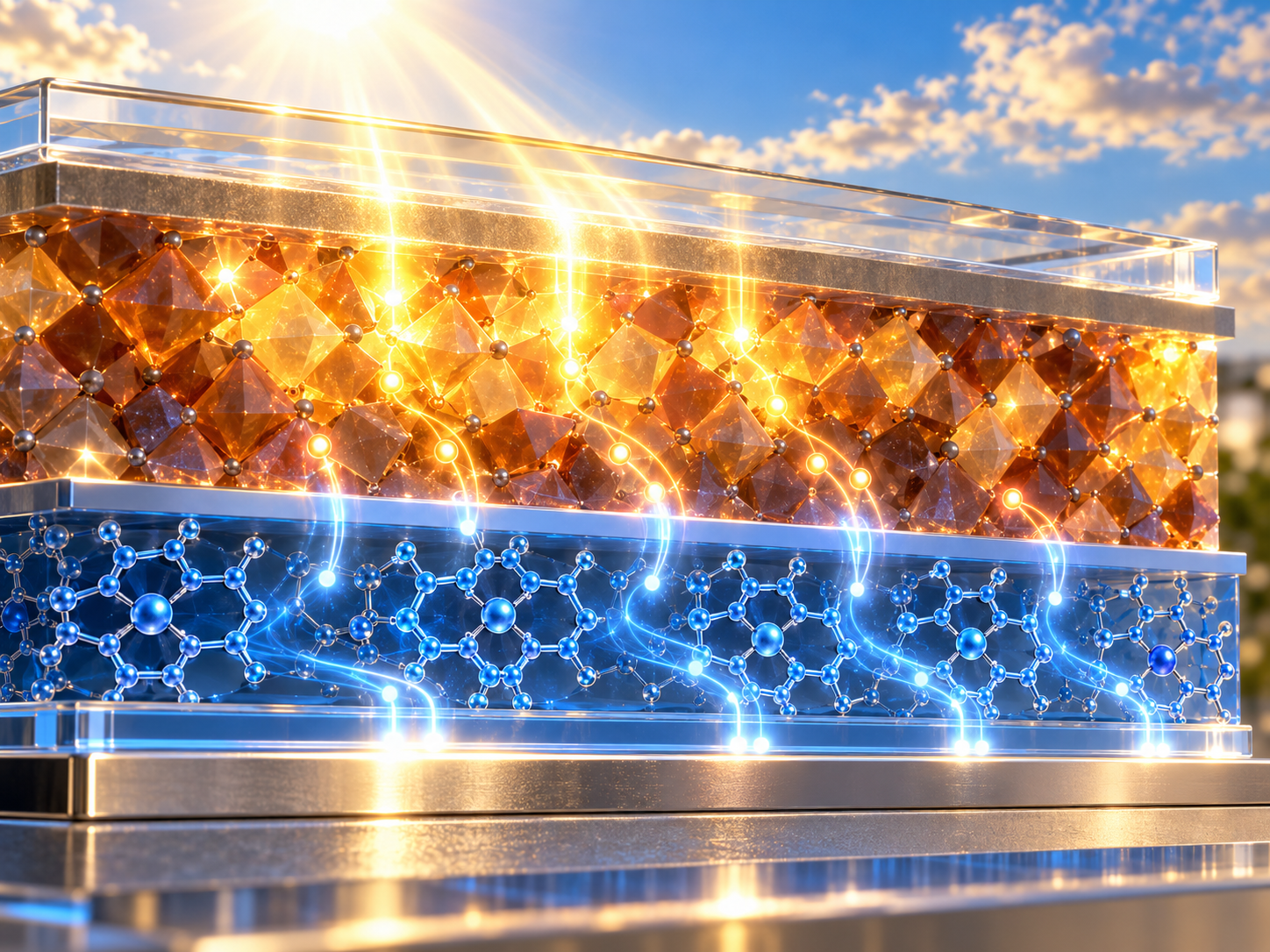
When sunlight is absorbed by a solar cell, electrons and holes (positive charge carriers resulting from the absence of electrons) are generated. Phthalocyanines can function as highly effective hole-transporting materials (HTMs), facilitating the extraction and transport of holes from the perovskite layer toward the corresponding electrode. This process helps reduce charge recombination losses and can improve overall device efficiency.
2. High Thermal and Chemical Stability
One of the major limitations of perovskite solar cells is their sensitivity to heat and moisture. In contrast, phthalocyanines are generally known for their excellent thermal and chemical stability, with certain derivatives remaining stable at temperatures approaching 400°C under appropriate conditions.
When incorporated into perovskite solar cells, suitably designed phthalocyanine layers may act as protective barriers, helping reduce moisture penetration and improve device stability.
3. Broad-Spectrum Light Absorption
Phthalocyanines exhibit strong optical absorption, particularly in the visible and near-infrared (NIR) regions, depending on their molecular structures. This property makes them attractive candidates for light-harvesting applications.
In appropriately designed photovoltaic architectures, their absorption characteristics may complement those of perovskite materials, potentially enabling more effective utilization of the solar spectrum.
The Marriage of Two Technologies: Solar Panels of the Future
Conventional perovskite solar cells frequently employ hole-transporting materials such as Spiro-OMeTAD. Although effective, these materials can be relatively expensive, and commonly used hygroscopic dopants may contribute to moisture-related instability, potentially reducing device lifetimes.
Phthalocyanines offer a promising alternative because certain derivatives can be synthesized through potentially more economical routes. Furthermore, their molecular structures can be modified to introduce hydrophobic (water-repellent) properties, helping protect the underlying perovskite layer from moisture.
In summary: While perovskite materials efficiently convert sunlight into electrical charge carriers, phthalocyanines can facilitate charge transport, reduce energy losses, and improve protection against environmental factors. Together, these materials have the potential to enhance both the efficiency and operational stability of next-generation solar cells.
What Does the Future Hold?
The combination of perovskites and phthalocyanines has the potential to reshape the future of solar energy technologies. Continued progress in this field could enable several exciting applications:
- Electricity-Generating Windows: Semitransparent solar cell designs could transform building windows into functional surfaces capable of generating electricity.
- Flexible and Wearable Electronics: Lightweight, bendable solar panels integrated into clothing, bags, or portable accessories could provide convenient energy sources for electronic devices.
- More Affordable Clean Energy: Advances in scalable and cost-effective manufacturing processes could reduce production expenses and potentially shorten the payback period of solar energy investments.
This sophisticated molecular engineering represents a promising step toward reducing our dependence on fossil fuels. By improving the efficiency, stability, and versatility of emerging photovoltaic technologies, these remarkable sunlight-harvesting phthalocyanine molecules may help unlock new possibilities for a cleaner and more sustainable energy future.
References
1. Kojima, A., Teshima, K., Shirai, Y., & Miyasaka, T. (2009). Organometal Halide Perovskites as Visible-Light Sensitizers for Photovoltaic Cells. Journal of the American Chemical Society, 131(17), 6050–6051.
2. Jiang, X., Wang, J., et al. (2020). Phthalocyanine-Based Hole-Transporting Materials for Perovskite Solar Cells. Advanced Energy Materials, 10(15), 1903852.
3. Urbani, M., de la Torre, G., Nazeeruddin, M. K., & Torres, T. (2019). Phthalocyanines and Phthalocyanine Analogues in Perovskite Solar Cells. Chemical Society Reviews, 48(10), 2738–2766.
4. Seok, S. I., Grätzel, M., & Park, N. G. (2018). Methodologies towards Highly Efficient and Stable Perovskite Solar Cells. Nature Materials, 17(11), 972–983.