
In Tokyo, a train moves silently without ever touching the tracks. Beneath the border between Switzerland and France, inside CERN's enormous underground tunnel, protons are accelerated to nearly the speed of light and guided by powerful superconducting magnets to uncover the mysteries of the subatomic world. Meanwhile, in a hospital room, strong magnetic fields allow physicians to visualize the inside of the human body without surgery, enabling the early diagnosis of many diseases. At first glance, these technologies may appear entirely unrelated, yet they all share one remarkable feature: superconductivity.
Superconductivity is the phenomenon in which certain materials lose all electrical resistance under specific conditions. Under normal circumstances, electric current flowing through a conductor interacts with atoms, causing part of its energy to be converted into heat. As a result, energy losses during electrical transmission are inevitable. In a superconducting material, however, electrical resistance drops to zero, allowing electric current to flow with virtually no energy loss. This extraordinary property offers enormous potential for future energy technologies.
The Birth of a Quantum Discovery
This remarkable physical phenomenon was first discovered in 1911 by the Dutch physicist Heike Kamerlingh Onnes. While cooling mercury to extremely low temperatures, Onnes observed that its electrical resistance suddenly disappeared. This unexpected finding revealed a quantum phenomenon beyond the scope of classical physics and marked the beginning of superconductivity research.
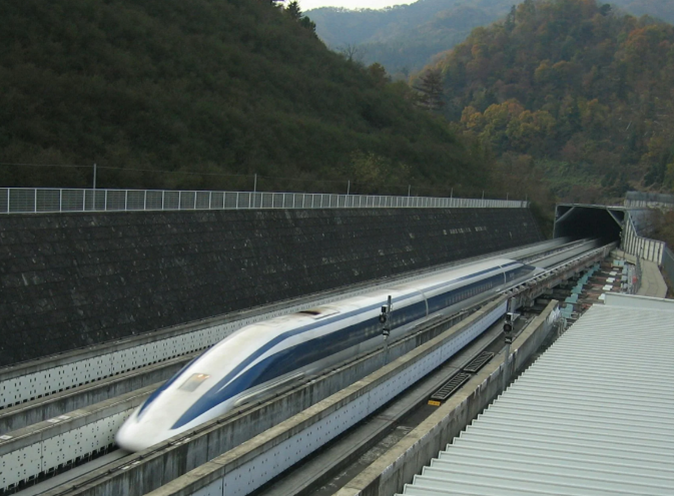
Scientists soon realized that superconductivity involved more than the disappearance of electrical resistance. In 1933, the discovery of the Meissner effect demonstrated that superconductors actively expel magnetic fields from their interior. As a consequence, magnets can seemingly float above superconducting materials. Modern magnetic levitation (maglev) trains developed in Japan operate based on this principle. Floating above the tracks without physical contact, these trains are capable of reaching speeds approaching 600 km/h.
Cooper Pairs and the BCS Theory
A comprehensive theoretical explanation of superconductivity was finally achieved in 1957 with the development of the BCS theory. According to this theory, electrons in the superconducting state no longer move independently. Instead, they form bound pairs known as Cooper pairs.
Although electrons normally repel one another because they carry the same electric charge, within a superconducting crystal they pair up and move cooperatively, much like perfectly synchronized dance partners. This coordinated motion prevents the scattering processes responsible for electrical resistance, allowing electric current to flow through the material with virtually no energy loss.
This groundbreaking theory earned John Bardeen, Leon Cooper, and Robert Schrieffer the 1972 Nobel Prize in Physics.
High-Temperature Superconductors
Superconductivity research entered a new era in 1986 when Georg Bednorz and Karl Alexander Müller discovered high-temperature superconductors. Their discovery revolutionized the field by significantly increasing the temperatures at which superconductivity could occur, greatly expanding the prospects for practical applications. They were awarded the 1987 Nobel Prize in Physics for this pioneering achievement.
Superconducting Technologies Today
Today, superconducting technologies play a vital role in numerous scientific and technological fields. Magnetic Resonance Imaging (MRI) systems used in hospitals rely on powerful superconducting magnets. Particle accelerators employ superconducting magnets to generate extremely strong magnetic fields required for steering high-energy particles. In addition, many of today's most advanced quantum computers are built upon superconducting circuits.
From an energy perspective, the potential of superconductivity is equally impressive. Conventional copper cables generate heat and lose energy when carrying large electrical currents. Superconducting cables, by contrast, can transport much higher current densities with almost zero power loss. For this reason, superconducting power transmission lines are widely regarded as one of the key components of future energy infrastructures.
Despite these remarkable advances, one of the greatest scientific challenges remains the operating temperature of superconducting materials. Most known superconductors exhibit their unique properties only at extremely low temperatures. Consequently, one of the most ambitious goals in modern materials science is the development of a room-temperature superconductor. Such a breakthrough could revolutionize energy transmission, transportation, computing, and countless other technologies.
Turkey and the Strategic Potential of Boron
In this context, one particularly important superconducting material for Turkey is magnesium diboride (MgB₂). Discovered in 2001, MgB₂ has a critical temperature of approximately 39 Kelvin, making it an attractive material for practical superconducting applications.
One of its most notable characteristics is that it contains boron. Turkey possesses more than 70% of the world's known boron reserves, giving the country a significant strategic advantage in the development of boron-based advanced materials and superconducting technologies.
MgB₂ is considered a promising material for applications including high-field magnets, superconducting power cables, and advanced magnetic systems. Therefore, for countries rich in boron resources, such materials represent not only scientific curiosity but also an important strategic technology with substantial economic and technological potential.
A Gateway to the Future
History has repeatedly shown that transformative technologies often originate from fundamental discoveries made in research laboratories. Superconductivity is one such discovery. By minimizing energy losses, enabling highly efficient technologies, and opening entirely new scientific frontiers, superconductivity has become one of the most exciting areas of modern science despite the significant challenges involved.
Perhaps in the near future, cities will distribute electricity through superconducting power grids, transportation systems will operate with frictionless magnetic technologies, and next-generation computers will rely on superconducting circuits.
When that day arrives, it will mark a quiet yet extraordinary revolution—one that reshapes the future of energy, technology, and human civilization.